One Bell, One Week: A Complete Training Split With a Single Kettlebell
Quick Answer: Three bell days covering four movement patterns runs a complete week with one kettlebell. Day 1 is hinge (swings 5×15, single-leg deadlifts 3×8 each, farmer carries). Day 2 is squat and press (goblet squats 4×10, single-arm press 3×8 each, goblet lateral lunge). Day 3 is a 15-minute complex. Add one Zone-2 walk day and one rest or yoga day. When it all gets easy, slow the tempo before you buy a bigger bell.
The fitness industry has a strong opinion about what you need: a rack, a full set, a system, ideally a subscription.
Meanwhile the kettlebell minimalists keep quietly getting strong in their living rooms with one bell and about four square feet of floor.
They’re right, and the reason is structural: the variety in a training week lives in the movement patterns, not the equipment count. One bell covers all four patterns that matter. Here’s the week.
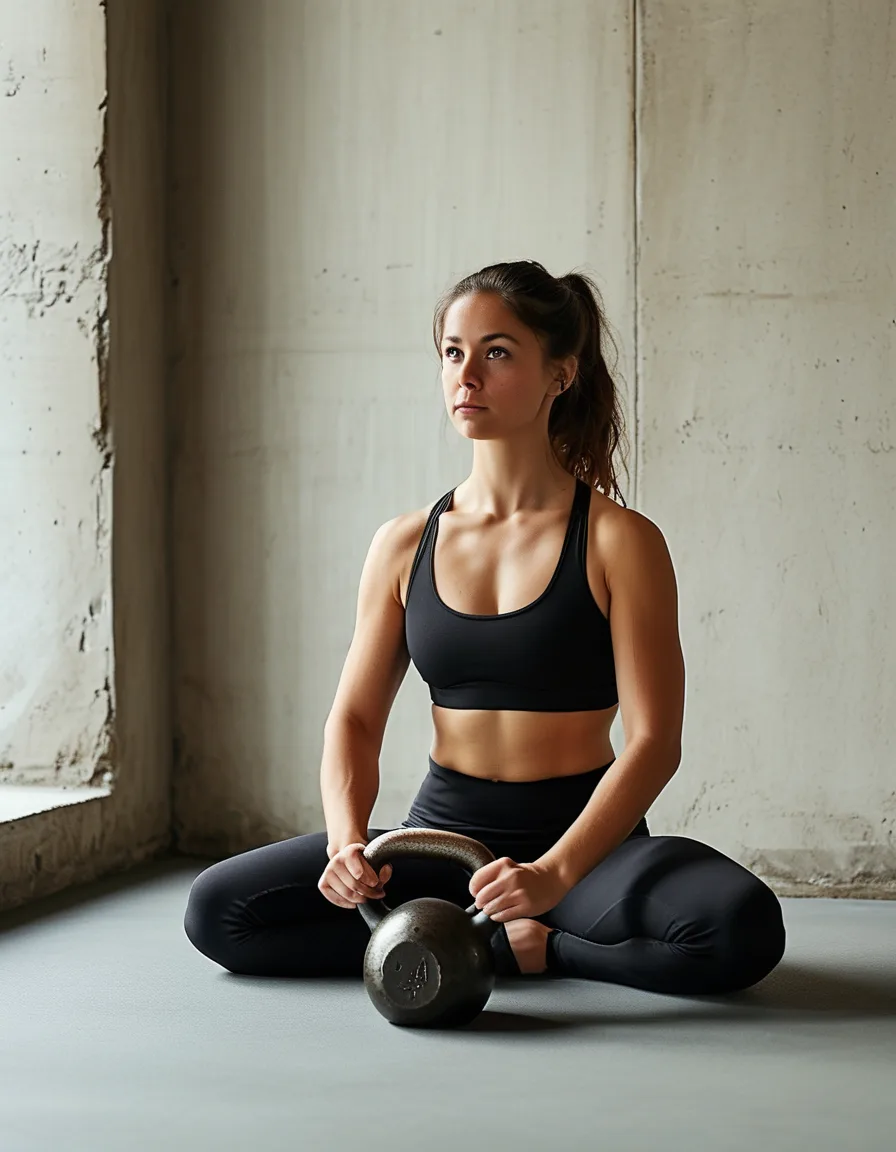

What Do You Do on Hinge Day?
The posterior chain’s full agenda, one bell.
- Swings — 5 sets of 15. The main course. Rest 60–90 seconds between sets. This is a hip snap, not a squat and not a front raise; the bell floats because your hips threw it, and your arms are rope.
- Single-leg deadlifts — 3 sets of 8 per side. Balance and hamstring credit simultaneously. Go slower than feels necessary; the wobble is the training effect.
- Farmer carries — 3 trips. Around the living room, down the hallway, wherever. Heavy, tall posture, until your grip complains. Carries are the most underrated thing on this list.
Roughly 25 minutes.
What Does the Squat and Press Day Look Like?
Legs and shoulders, filed jointly.
- Goblet squats — 4 sets of 10. The best squat-form teacher there is: the bell at your chest forces an upright torso and stops you folding forward. Pause one second at the bottom.
- Single-arm press — 3 sets of 8 per side. Your core works as hard as your shoulder here — pressing on one side means resisting rotation on the other, which is the whole hidden benefit of unilateral work.
- Goblet lateral lunge — 3 sets of 8 per side. The side-to-side plane almost nobody trains, and the one your hips will thank you for in a decade.
Roughly 25 minutes.

How Does a Kettlebell Complex Work?
The complex. One sequence, no putting the bell down mid-round:
5 swings → 5 goblet squats → 5 rows each arm → 5 push-presses.
Repeat for 15 minutes at a pace where your breathing is heavy but you could still say a short sentence. Rest as needed between rounds — that rest is the intensity dial.
Complexes turn one bell into cardio, and the clock does the loading instead of the weight. This is why a single moderate kettlebell can produce a genuinely hard session: you’re not adding plates, you’re removing rest.
Most people get 6–9 rounds in 15 minutes on their first attempt. Track it; it’s the cleanest progress marker in the whole program.

How Do You Structure the Full Week?
Three bell days, spaced out. One Zone-2 walk day. One rest or yoga day. Weekend for whatever movement you actually enjoy.
A workable layout: Monday hinge, Wednesday squat-press, Friday flow, Tuesday or Thursday a 30–45 minute easy walk, one full rest day, weekend open.
Total structured training time: about 75 minutes a week, plus the walk.
When the bell gets easy everywhere, progress in this order: slower tempos first (3 seconds down on squats and presses), then pause reps, then added sets, and only then a bigger bell. That sequence buys you months of progression from equipment you already own — which is the actual argument for minimalism, not aesthetics.
What Nobody Tells You About Single-Kettlebell Training
The bell size question has a boring answer. Most women start well with 8–12 kg (18–26 lb), most men with 16 kg (35 lb). If you can only own one, size it for swings and accept that presses will be hard and goblet squats will eventually be easy — swings are the movement that carries the program.
Your grip fails before your muscles do, at first. That’s normal and it resolves within a few weeks. Chalk helps; so does not gripping the handle in a death clench during swings.
Swings are a hinge, and almost everyone squats them for the first month. If your knees travel forward and the bell dips low between your legs on the way down, you’re squatting it. Push your hips back toward the wall behind you, keep the bell path high, and let the arms stay passive.
The floor is a real limitation. Dropping or thudding a kettlebell will find out how solid your floor is. A cheap mat solves most of it and all of your downstairs neighbor’s objections.
Two days a week still works. If three sessions isn’t realistic, hinge day and squat-press day alternating is a perfectly legitimate program. Consistency at two beats aspiration at four.
If you’re new to loaded hinging, or you have a history of back or shoulder problems, spend a session with a coach on swing technique before adding volume. The swing is safe when it’s a hinge and unforgiving when it’s a lift with your lower back.
Mini FAQ
Can you really build muscle with just one kettlebell?
For most general-fitness goals, yes — particularly early on, and especially with tempo, pause reps, and higher volume as your progression levers. Dedicated hypertrophy past the intermediate stage does eventually want heavier loading options, but that’s a much later problem than the industry suggests.
What weight kettlebell should a beginner buy?
8–12 kg for most women, 16 kg for most men, sized primarily for swings. If you’re between sizes, go heavier — swings need load, and you can always regress a press to two hands.
How long until you see results from kettlebell training?
Conditioning improves noticeably within 3–4 weeks; strength and visible change take 8–12 weeks of consistency. The complex round count is the fastest-moving number and the most motivating thing to track early.
TL;DR:
- Three bell days cover four patterns: hinge, squat, press, and carry — that’s a complete week.
- Day 1 hinge (swings 5×15, SLDL 3×8, carries), Day 2 squat-press (goblet 4×10, press 3×8, lateral lunge), Day 3 a 15-minute complex.
- Add one Zone-2 walk day and one rest day. About 75 minutes of structured training a week.
- Progress with tempo and pauses before buying a heavier bell — that’s months of runway from one piece of equipment.
- The swing is a hinge, not a squat. Get that right before adding volume.
Hinge day, squat-press day, flow day. One bell, four patterns, complete week. The rack was optional all along — the consistency never was.
Keep Reading
This article is for general informational and styling purposes only. Fit, sizing, and product availability may vary.