How to Kettlebell Train in an Apartment Without Angering Your Downstairs Neighbor
Quick Answer: The noise problem isn’t the kettlebell itself — it’s setting it down hard between reps and swings. A thick rubber mat plus deliberately controlled, quiet set-downs (not drops) lets you do most kettlebell training in an apartment without disturbing neighbors below.
The kettlebell isn’t loud. The way most people put it down is.
Where does most kettlebell noise actually come from?
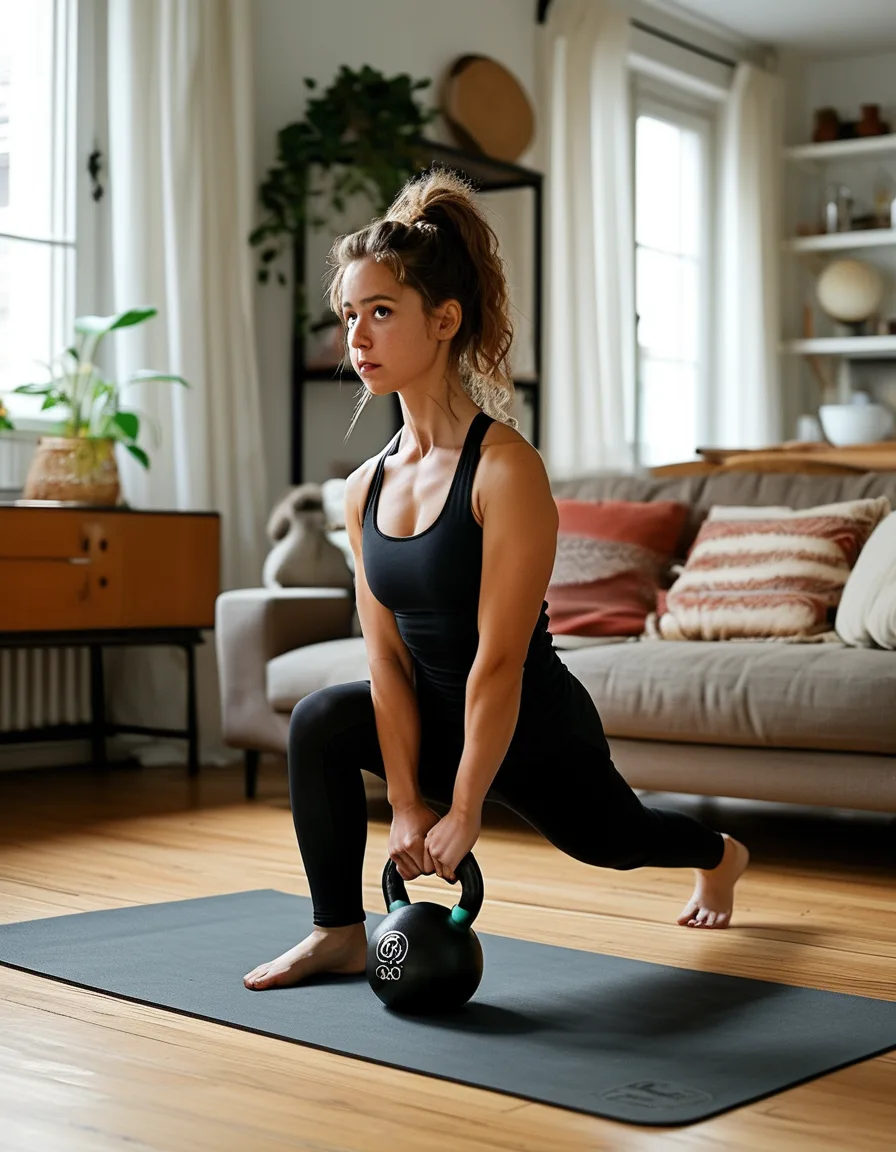
Not the swing itself — the impact when the bell touches the floor between reps or sets. Dropping a kettlebell from hip height onto hardwood transmits impact noise directly through the floor structure, which is exactly what a downstairs neighbor hears as a bang.
What equipment actually solves this?
A thick rubber gym mat (3/4 inch or more) absorbs most impact noise on its own. Placing that mat over a secondary layer like interlocking foam tiles adds meaningful extra sound dampening for apartments with especially sensitive floors.
Which kettlebell moves are naturally apartment-friendlier?
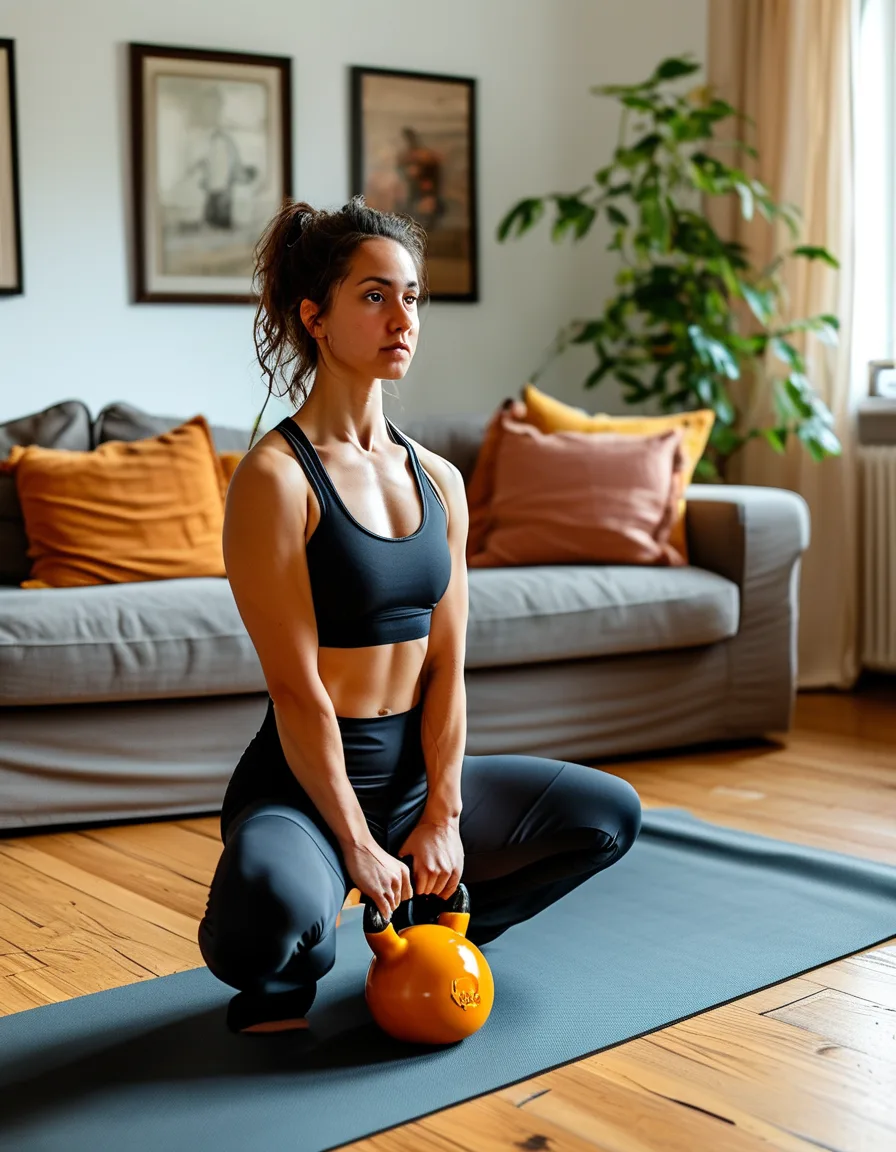
Goblet squats, presses, and Turkish get-ups involve minimal floor impact by nature. Swings and snatches are the noisiest by default — not from the swing motion itself, but from the habit of dropping the bell at the bottom instead of guiding it down.
What Nobody Tells You About Quiet Kettlebell Training
The habit of controlling the set-down, not just avoiding drops, is the real skill — actively decelerating the bell in the last few inches before it touches the mat, rather than just releasing it slightly less hard. This single habit change eliminates most apartment noise complaints without changing your actual program.
FAQ: Kettlebell Training in Apartments, Answered
What time of day is realistically safest to train?
Mid-morning to early evening is generally more forgiving than early morning or late night, when even moderate noise reads as more disruptive.
Do rubber-coated kettlebells help with noise?
Slightly, for surface contact noise, but the mat and controlled set-down matter far more than the kettlebell’s coating.
Should I just switch to dumbbells if noise is a real problem?
Not necessary — with a good mat and controlled set-downs, most kettlebell training works fine in apartments; save dumbbells for if the noise concern is truly non-negotiable.
TL;DR:
- Most kettlebell noise comes from impact when setting the bell down, not the exercise itself
- A thick rubber mat solves most of the problem on its own
- Swings and snatches are noisiest by default — control the set-down, don’t drop
- Goblet squats, presses, and get-ups are naturally the quietest moves to start with
It’s a technique fix, not an equipment downgrade — you can keep the kettlebell.
Keep Reading
This article is for general informational and styling purposes only. Fit, sizing, and product availability may vary.