How Much Space You Actually Need for Kettlebell Training at Home
Quick Answer: Most core kettlebell movements — swings, goblet squats, presses, cleans — genuinely need only about 6x6 feet (roughly 2x2 meters) of clear space plus ceiling height for overhead presses, which is far less than the open gym-floor image kettlebell training usually conjures.
The kettlebell space myth is mostly a mental barrier, not an actual measurement problem — most living rooms already clear this bar without rearranging furniture.
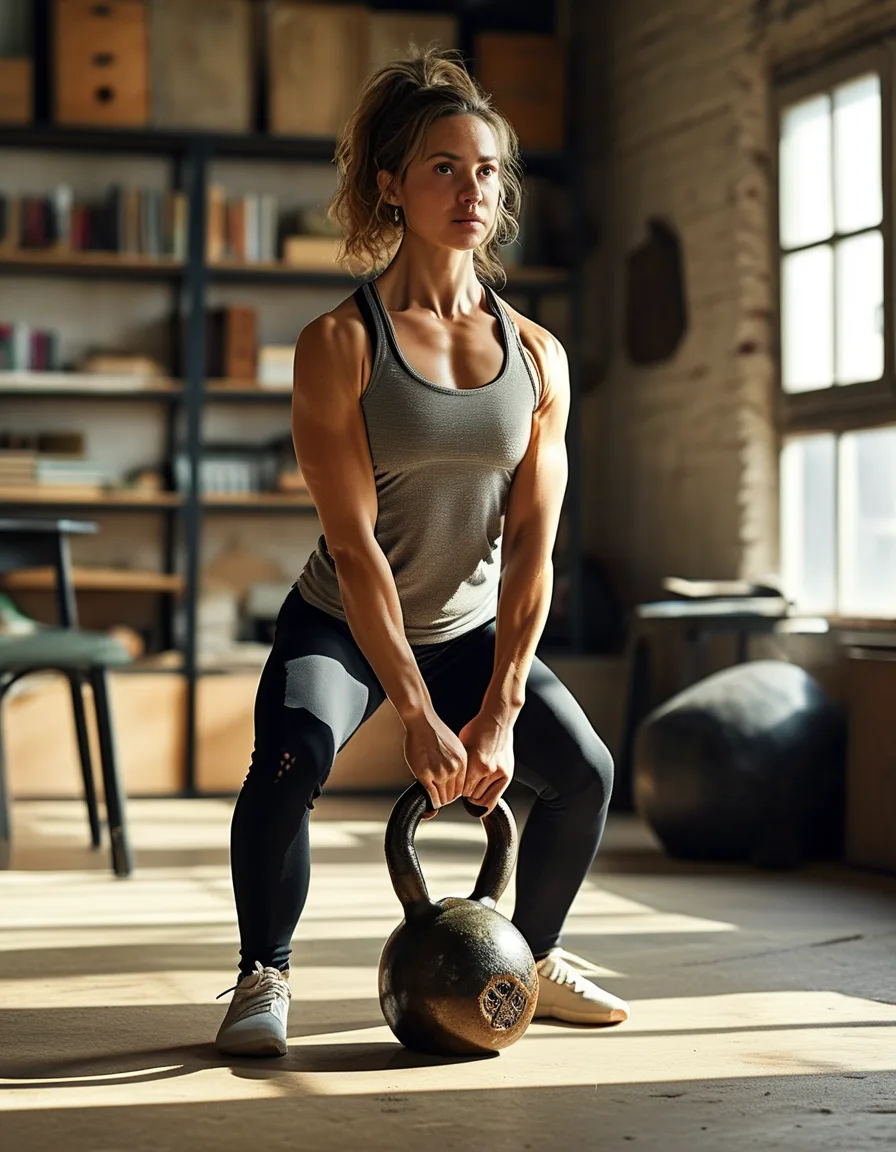
How much clearance does a kettlebell swing actually require?
A swing needs clearance mainly in front of and slightly behind the body for the kettlebell’s arc, plus a stable, non-slip floor — roughly a 6x6 foot square covers this for most body heights and kettlebell sizes.
The main real constraint isn’t floor space but ceiling height for the top of the arc during heavier swings, and flooring that can handle repeated kettlebell contact if a rep is dropped.
What flooring actually matters for home kettlebell training?
A rubber gym mat or dedicated kettlebell mat protects both the floor and the kettlebell, and also reduces noise transfer to downstairs neighbors — a real practical concern for apartment training that’s easy to underestimate.
Hard surfaces like hardwood or tile without a mat risk both damage from a dropped kettlebell and considerably more impact noise than most people expect.
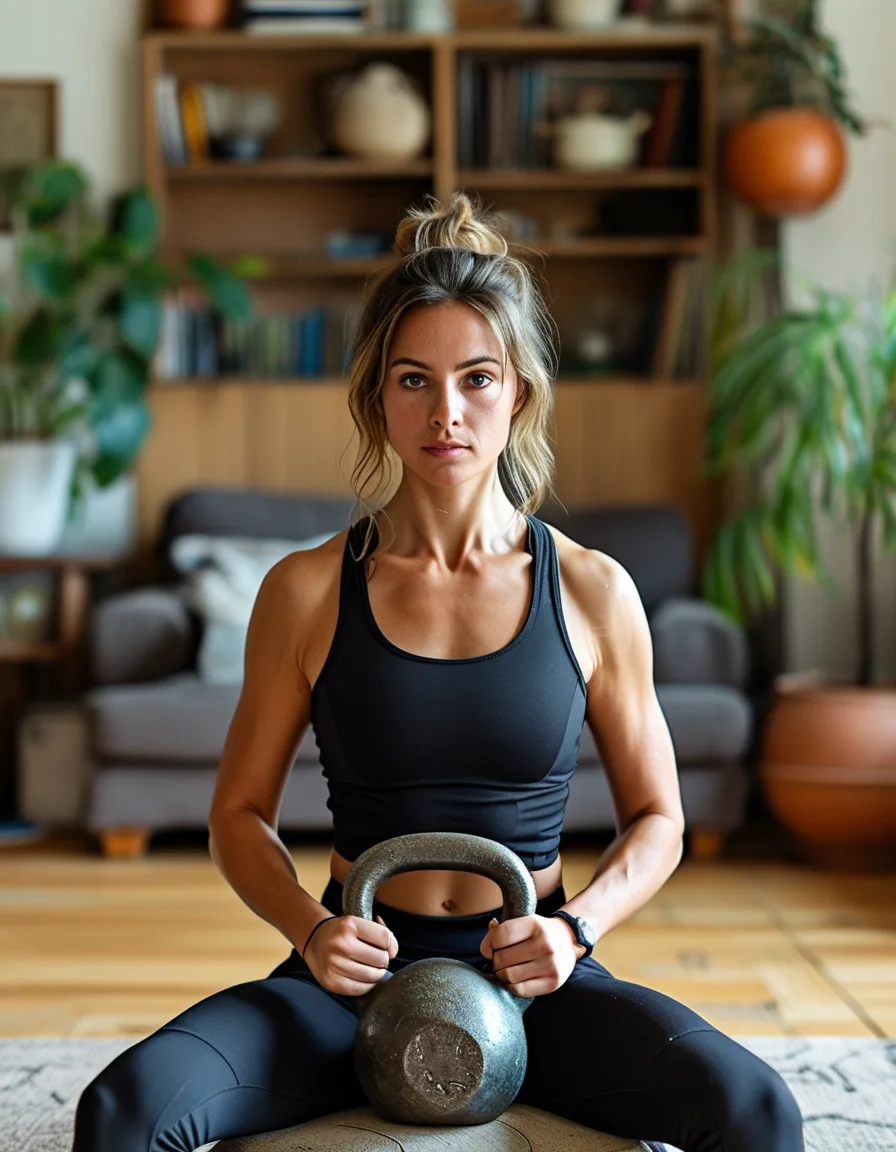
What Nobody Tells You About Overhead Movement Ceiling Clearance
Here’s the constraint people actually run into: ceiling height, not floor space, is what most often limits kettlebell overhead presses and snatches in apartments with standard 8-foot ceilings, especially for taller individuals.
Swapping an overhead press for a movement like a goblet squat or a kettlebell row on days with limited vertical clearance is a simple, effective workaround rather than needing to relocate the whole workout.
What’s the practical minimum home kettlebell setup?
- A 6x6 foot clear floor area, away from furniture, glass, or fragile items
- A rubber mat for floor protection and noise reduction
- One or two kettlebell weights to start (a moderate weight for swings/hinges, a lighter one for presses) rather than a full rack
- A quick furniture check for overhead clearance before attempting presses or snatches specifically
FAQ: Kettlebell Space Questions, Answered
Can you do a full kettlebell workout in a small apartment?
Yes — swings, goblet squats, cleans, presses, and rows all fit within a modest 6x6 foot area with adequate ceiling height for the overhead movements.
Do I need special flooring for kettlebell training?
A rubber gym mat is strongly recommended for protecting floors and reducing noise, though it’s not strictly mandatory if you’re careful with technique and never fully release the kettlebell mid-swing.
What’s the minimum ceiling height needed for kettlebell training?
Standard 8-foot residential ceilings typically accommodate most overhead kettlebell movements for average height individuals, though very tall people may need to substitute certain overhead exercises.
TL;DR:
- Core kettlebell moves need about 6x6 feet of clear floor space, not a full gym floor
- A rubber mat protects flooring and meaningfully reduces impact noise for apartments
- Ceiling height, not floor space, is the more common real constraint for overhead moves
- Swapping overhead presses for floor-based moves solves most low-ceiling situations
Small-space kettlebell training isn’t a compromise — for most of the core movements, it was never actually a space-constrained workout to begin with.
Keep Reading
This article is for general informational and styling purposes only. Fit, sizing, and product availability may vary.