The Kettlebell Callus Problem Nobody Warns Beginners About
Quick Answer: Kettlebell training builds calluses faster than most other strength training due to the ballistic swinging and grip changes involved, and the real risk isn’t the callus itself but a callus tearing mid-workout — regular filing to keep calluses smooth and thin, rather than letting them build up thick, prevents most tears.
A few weeks into consistent kettlebell training, you either develop tough, functional calluses or you tear one open mid-swing and lose training days to a raw, painful palm. The difference usually comes down to simple maintenance most beginners never think to do until after the first tear.


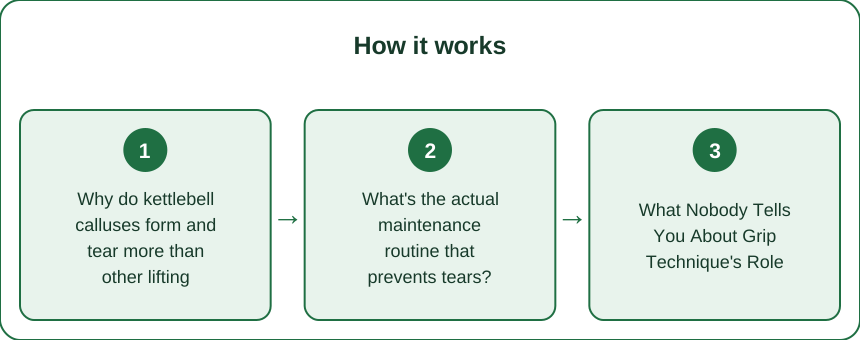
Why do kettlebell calluses form and tear more than other lifting calluses?
Kettlebell swings and cleans involve the handle sliding slightly within the grip during ballistic movement, unlike a static barbell grip, which creates friction patterns that build thicker, more unevenly distributed calluses faster than steady lifting does. Once a callus gets thick and uneven, the edges become a weak point prone to catching and tearing during a hard swing session.
Sweat also plays a role — a slightly sweaty grip changes friction in ways that can accelerate both callus buildup and, eventually, tearing, especially during high-rep kettlebell conditioning work compared to lower-rep strength lifts.
What’s the actual maintenance routine that prevents tears?
Regularly filing down calluses with a pumice stone or callus file (after a shower, when skin is softened) to keep them smooth and moderately thin, rather than letting them build up thick and uneven, is the single most effective prevention step most kettlebell lifters skip. A thick, ragged callus edge is what actually catches and tears — a smooth, moderate callus is far more tear-resistant even under heavy training volume.
Regular moisturizing (hand cream, particularly before bed) keeps the callus and surrounding skin more pliable rather than dry and brittle, since dry skin is more prone to cracking and tearing under the same friction that a well-moisturized, smooth callus handles fine.

What Nobody Tells You About Grip Technique’s Role
Beyond skin care, grip technique itself affects tear risk — gripping too tightly throughout the entire swing (rather than relaxing grip during the upswing float and only gripping firmly at key points) creates more friction and hot spots than a more relaxed, technically efficient grip. This is part of why more experienced kettlebell lifters, with generally better grip economy, sometimes tear less often than newer lifters despite higher training volumes.
Chalk, used properly (a thin layer, not caked on), can also reduce the slipping that causes friction hot spots, similar to its role in other grip-intensive training — though some lifters prefer grip-specific kettlebell gloves or tape over bare-hand chalk, which is a matter of personal preference once basic callus maintenance is in place.
5 Mistakes People Make With Kettlebell Hand Care
1. Never filing calluses down, letting them build thick and uneven until they tear.
2. Filing too aggressively, removing so much callus that hands are under-protected for the next heavy session.
3. Ignoring hand moisturizing between training sessions.
4. Gripping too tightly throughout the entire swing rather than relaxing during the float phase.
5. Continuing to train on an already-torn callus instead of taping it and letting it heal properly.
FAQ: Kettlebell Hand Callus Questions, Answered
How often should I file down kettlebell calluses?
Many regular lifters file every week or two, ideally after a shower when skin is softer and easier to work with.
Should I use gloves to avoid calluses entirely?
Some lifters prefer gloves, though many find bare-hand training with proper callus maintenance gives better grip feedback; it’s a personal preference once tear-prevention basics are covered.
What should I do if a callus tears mid-workout?
Stop training that grip pattern, clean and cover the area, and give it several days to heal before returning to heavy grip-intensive kettlebell work.
TL;DR:
- Kettlebell’s sliding grip pattern builds thicker, more tear-prone calluses than static lifting
- Regular filing to keep calluses smooth and moderately thin prevents most tears
- Moisturizing keeps skin pliable and more resistant to cracking under friction
- Grip technique (relaxing during the float phase) also reduces friction hot spots.
Keep Reading
This article is for general informational and styling purposes only. Fit, sizing, and product availability may vary.