Why Your Grip Gives Out Before Your Muscles Do in Kettlebell Training — and the Fix
Quick Answer: Grip fatigues faster than larger muscle groups because forearm muscles are smaller and work isometrically (constant tension, no rest between reps) during swings and carries. Chalk, an open-hand swing technique, and dedicated grip work — done separately from your main lifts — fix this faster than just ‘training through it.’
Your hips and legs feel like they could do another 10 swings. Your hands disagree completely, and somewhere around rep 15 the kettlebell starts to feel like it’s actively trying to escape your palm. That’s not weakness — that’s just physics catching up to a much smaller muscle group.
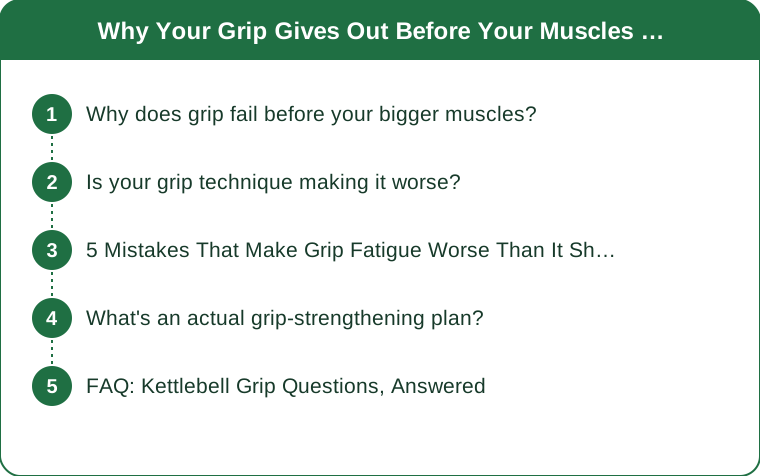
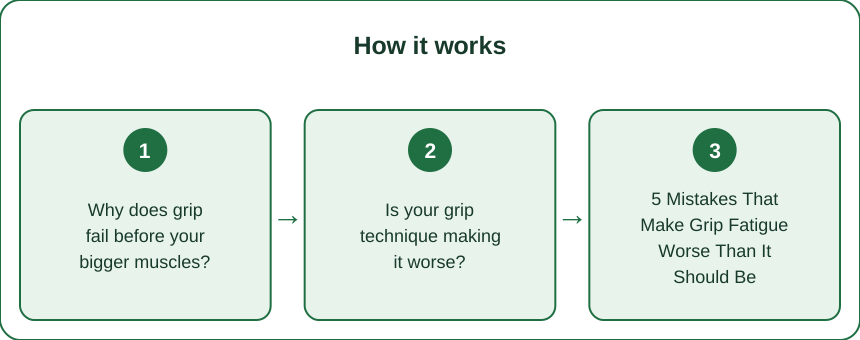
Why does grip fail before your bigger muscles?
Forearm and hand muscles are simply smaller than glutes, hamstrings, or lats — smaller muscles fatigue faster under the same relative demand.
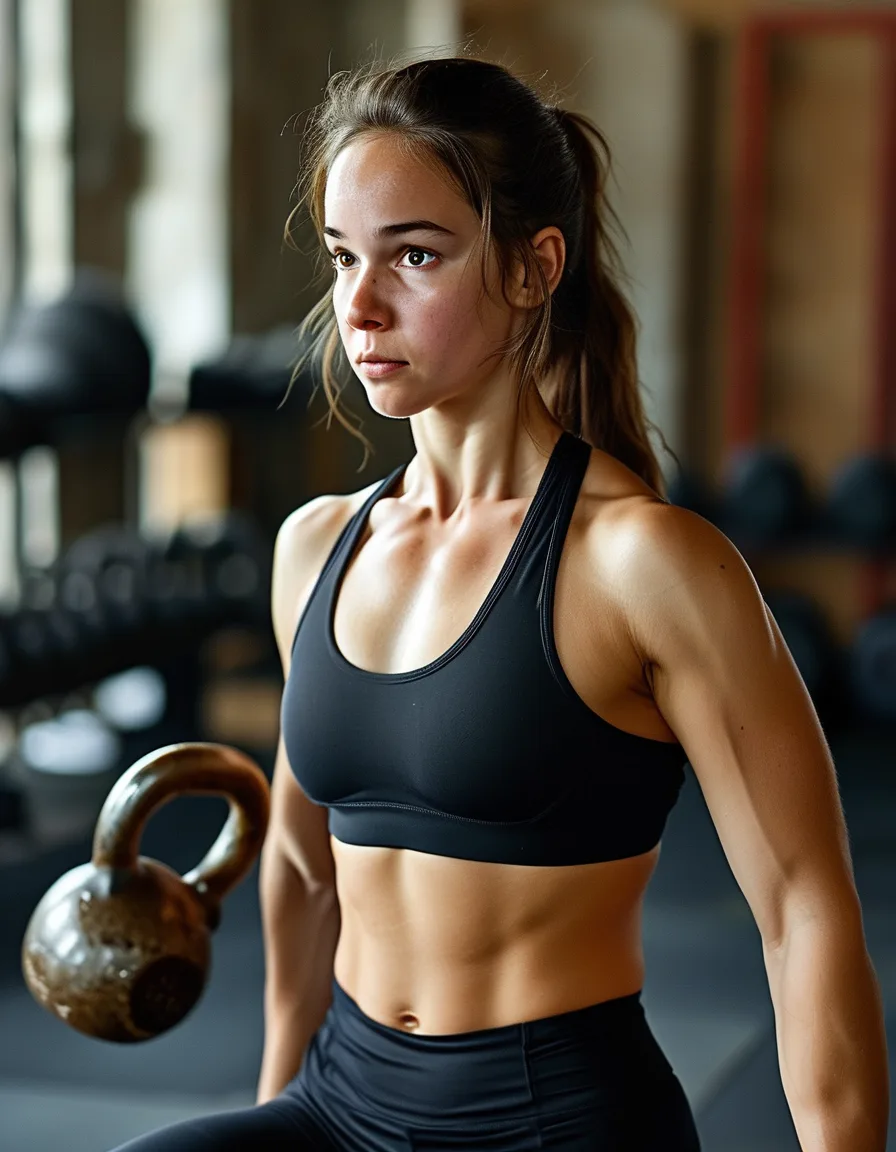
Add that kettlebell swings and carries require isometric grip — constant tension with no relaxation phase, unlike your hips which get a brief unload at the top of each swing. Isometric holds fatigue muscle notably faster than the same muscle working dynamically, which is exactly why grip taps out first.
Is your grip technique making it worse?
Almost certainly, if you’re white-knuckling the handle the entire swing. The fix: open-hand swing technique — let the kettlebell handle roll slightly into your fingers at the top of the swing, only closing your full grip through the power phase.
This single technique change lets your forearm muscles get a genuine micro-rest each rep instead of staying maximally contracted the entire set — often adding several reps before grip failure.
5 Mistakes That Make Grip Fatigue Worse Than It Should Be
1. Death-gripping the handle the whole rep. Constant max tension burns through grip endurance fast — see the open-hand fix above.
2. Skipping chalk. Sweaty palms force a tighter grip just to maintain control, which accelerates fatigue further.
3. Never training grip on its own. Farmer’s carries and dead hangs build grip endurance directly — most people only train it incidentally through other lifts.
4. Using a kettlebell handle that’s too thick for your hand size. Thicker handles demand more grip force for the same load — sizing matters more than people think.
5. Ignoring forearm recovery. Grip muscles need rest like any other muscle group — training them to failure daily slows overall progress.
What’s an actual grip-strengthening plan?
Add 2x weekly, separate from your main kettlebell session:
- Farmer’s carries: heaviest kettlebells you can hold with good posture, 30-40 second carries, 3-4 rounds
- Dead hangs: from a pull-up bar, accumulate 60 total seconds across sets
- Plate pinches: pinch-grip a weight plate for time, 3 sets
Within 4-6 weeks, most people notice their swing and carry sets extend meaningfully longer before grip becomes the limiter.
FAQ: Kettlebell Grip Questions, Answered
Does chalk actually make a measurable difference?
Yes — sweaty-palm grip studies consistently show reduced grip endurance versus a chalked or dry grip, often a noticeable difference within the same session.
Should I train grip before or after my main kettlebell workout?
After, or on a separate day — pre-fatiguing grip before swings or cleans can compromise your form on the bigger movement.
Is it normal for grip to be the limiting factor in kettlebell training?
Extremely common, especially early on — it’s one of the most frequently under-trained links in the whole kettlebell chain.
TL;DR:
- Grip fails first because forearm muscles are smaller and work isometrically during swings and carries
- Open-hand swing technique gives your grip a micro-rest each rep instead of constant max tension
- Chalk measurably extends grip endurance versus sweaty palms
- Add farmer’s carries and dead hangs 2x weekly to build grip capacity directly
A stronger grip isn’t a side benefit of kettlebell training — for most people, it’s the actual bottleneck worth training on purpose.
Keep Reading
This article is for general informational and styling purposes only. Fit, sizing, and product availability may vary.